Microneedling is a minimally invasive skin treatment that uses a device fitted with fine needles to create thousands of controlled micro-injuries across the skin's surface. Those tiny channels trigger your body's natural wound-healing response producing new collagen, new elastin, and fresher, healthier skin cells in their place. It's one of the most evidence-backed treatments in aesthetic medicine, and at Mira Integrative Clinic in Vienna, VA, it's one of the treatments our patients return to again and again.
This guide covers everything you need to understand before your first consultation: how microneedling actually works, what it can treat, what to expect during and after a session, and how to know if you're a good candidate.
How Microneedling Works: The Science of Collagen Induction
Your skin is in a constant state of repair but it only replaces what it perceives as damaged or depleted. Microneedling works by giving it a controlled reason to rebuild.
During a session, a precision device creates microscopic channels in the epidermis and upper dermis, the layers of skin responsible for texture, firmness, and tone. These micro-injuries are too small to cause lasting damage, but large enough to activate your body's three-phase healing response: the inflammatory phase (immune cells rush to the area), the proliferative phase (new collagen and elastin fibers begin forming), and the remodeling phase (those new fibers integrate and mature over several weeks).
The result is a gradual but real structural improvement to the skin, not a surface-level fix, but a regenerative process driven by your own biology. Collagen is the protein that keeps skin firm and smooth; elastin is what allows it to spring back. Both decline with age, sun exposure, and skin damage. Microneedling gives your body a precise signal to produce more of both.
This process is also called collagen induction therapy (CIT), and it's the reason microneedling produces results that continue improving for weeks after the session itself is over.
What Skin Conditions Can Microneedling Treat?
Microneedling is one of the more versatile treatments in aesthetics because it works at the structural level, improving the quality of the skin itself rather than targeting a single surface symptom. It's effective for a wide range of concerns:
Fine Lines and Wrinkles
By stimulating collagen production in the dermis, microneedling helps soften lines around the eyes, mouth, and forehead. It's particularly effective for superficial lines that aren't yet deep enough to require injectable treatment.
Acne Scars and Textural Scarring
This is one of microneedling's strongest applications. Atrophic (depressed) acne scars respond well because the collagen remodeling process can gradually fill and smooth the scar tissue from beneath. Results require multiple sessions and improve progressively.
Enlarged Pores
Pore size is largely determined by the elasticity of the surrounding skin. As collagen improves, the tissue around each pore tightens, making pores appear smaller and less visible.
Uneven Skin Tone and Hyperpigmentation
The controlled turnover of skin cells that microneedling triggers can help fade post-inflammatory hyperpigmentation (dark spots left by acne or sun damage), resulting in a more even, consistent tone over a series of treatments.
Skin Laxity and Loss of Firmness
As elastin production increases, skin regains some of its natural rebound and firmness. This is especially relevant for early laxity on the cheeks, jawline, and neck, though patients with more significant laxity may see better results with Virtue RF Microneedling, which adds radiofrequency energy for deeper tissue tightening.
Dull or Rough Overall Texture
Even without a specific diagnosis, skin that looks tired, rough, or congested often responds well to microneedling. The combination of cell turnover and collagen renewal leaves skin noticeably smoother and more luminous after a series of sessions.
Stretch Marks
Stretch marks are a form of dermal scarring, and microneedling can improve their appearance over time, though results are slower and more variable than with facial skin. Multiple sessions are typically needed.
Microneedling is effective across most skin types and tones. A consultation helps determine whether it's the right approach for your specific concern and whether standard microneedling or a more advanced option like Virtue RF will get you there faster.
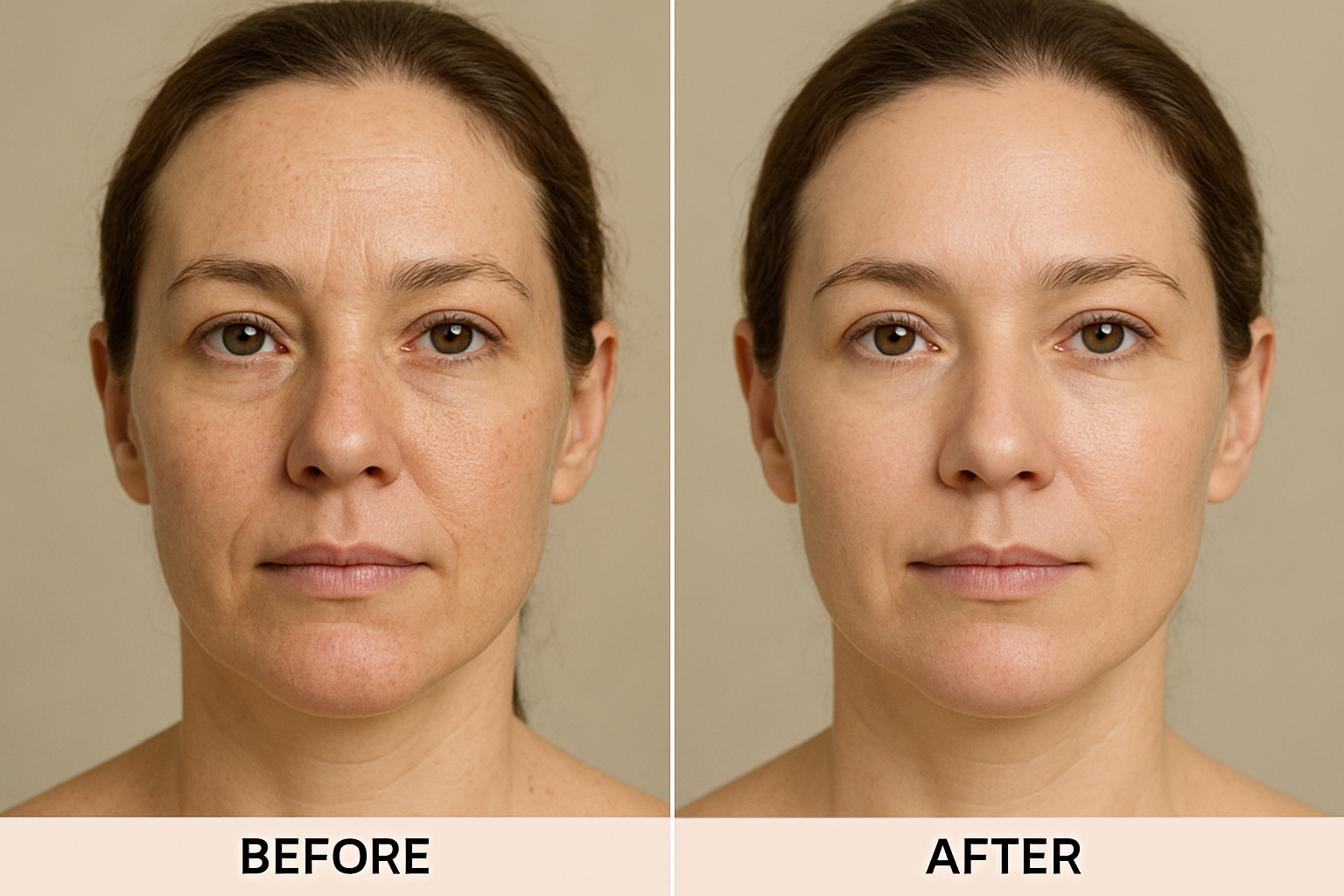
The Real Benefits of Microneedling (Beyond the Before-and-Afters)
It's easy to focus on photos when researching a treatment, but understanding why microneedling works helps set realistic expectations and helps you choose the right treatment for your goals.
- It uses your own biology. Microneedling doesn't inject anything or resurface the skin chemically. The improvement comes from stimulating your body's natural repair system. That means results look natural because they are natural.
- Minimal downtime. Most patients experience redness and mild warmth for 24–48 hours, similar to a moderate sunburn. There's no peeling, no open wounds, and no need to take time off. Compare that to deep chemical peels or ablative laser resurfacing, which can require a week or more of recovery.
- Works on all skin tones. Some laser treatments carry a risk of post-inflammatory hyperpigmentation in darker skin tones. Microneedling doesn't generate heat, which means it's generally safe across the Fitzpatrick skin type spectrum.
- Results are cumulative. Each session builds on the last. Collagen remodeling continues for weeks after treatment, and a full series produces significantly better results than a single session.
- Can be combined with other treatments. Microneedling is often paired with PRP (platelet-rich plasma), topical serums applied during treatment, or other modalities depending on your skin goals.
- Customizable to your skin. Needle depth, device speed, and number of passes can all be adjusted based on your concern, skin sensitivity, and treatment area — making each session tailored rather than one-size-fits-all.
Does Microneedling Hurt? What the Experience Actually Feels Like
This is one of the most common questions patients ask before their first session, and the honest answer is: it's more comfortable than most people expect.
Before your session begins, a topical numbing cream is applied and left on for 30–45 minutes. By the time treatment starts, the skin's surface is thoroughly numbed. Most patients describe the sensation as a warm pressure, a mild scratching or vibration rather than anything sharp or painful.
Sensitivity does vary by area. The forehead and nose tend to be more sensitive than the cheeks or jawline. Your provider can slow the pace or adjust depth in more sensitive zones. If you're ever uncomfortable during a session, that's always something to say out loud, adjustments can be made immediately.
Immediately after treatment, your skin will look pink-to-red and feel warm, similar to a sunburn. This typically peaks in the first few hours and subsides significantly within 24–48 hours for most patients. Some people experience mild swelling or tight skin for a day or two. Most patients return to their regular routine, with gentle skincare only, the next day.
What you will want to avoid is sun exposure, active skincare ingredients (retinoids, acids, vitamin C), and anything that creates heat or pressure on the skin for 72 hours. For the full day-by-day aftercare breakdown, see our Microneedling Session Guide.
Standard Microneedling vs. Virtue RF Microneedling: What's the Difference?
Standard microneedling and Virtue RF Microneedling share the same foundation — both use precision needles to create micro-channels in the skin. The difference is what happens next.
With standard microneedling, the micro-channels themselves are the treatment: they trigger the collagen induction cascade described above, improving texture, tone, and superficial lines over a series of sessions.
With Virtue RF Microneedling, radiofrequency energy is delivered through those same channels directly into the deeper dermis and subdermal tissue. That RF heat triggers a second biological response, tissue contraction and a deeper level of collagen remodeling that standard microneedling alone cannot reach. The result is more pronounced tightening, more significant improvement in laxity, and for many patients, fewer sessions to achieve their goal.
Standard microneedling is an excellent choice for texture, tone, acne scars, and general skin quality. Virtue RF tends to be the stronger option when skin laxity, deeper wrinkles, or jawline definition are primary concerns. Both are offered at Mira Integrative Clinic, and the right choice depends on your skin, your goals, and your timeline.
What to Expect: Sessions, Prep, Aftercare & Results
A typical microneedling series involves 3–6 sessions spaced 4–6 weeks apart. Your provider will recommend a specific protocol based on your skin concern, starting point, and goals, someone treating mild texture will follow a different plan than someone working on significant acne scarring.
Preparation involves stopping certain products and medications in the days before your session, retinoids, NSAIDs, active exfoliants, and a few others. Aftercare focuses on gentle hydration, strict sun protection, and avoiding active ingredients for 72 hours post-treatment. Results begin building at 4–6 weeks as new collagen matures, and continue improving through your full series.
Who Is a Good Candidate for Microneedling?
Microneedling works well for a broad range of patients, but like any treatment, it's not the right fit for everyone at every time.
You're likely a good candidate if you:
- Have fine lines, mild-to-moderate skin laxity, acne scars, enlarged pores, or uneven texture or tone
- Want progressive, natural-looking improvement rather than dramatic or immediate change
- Are in generally good skin health (no active infections or open lesions in the treatment area)
- Have any skin tone - microneedling is safe across the full Fitzpatrick spectrum
You should pause or consult with your provider first if you:
- Have active acne, an active skin infection, or open sores in the treatment area
- Have a personal history of keloid or hypertrophic scarring
- Are currently pregnant
- Have used isotretinoin (Accutane) within the last six months
- Have an active cold sore or history of frequent cold sores (your provider may prescribe a prophylactic antiviral)
The best way to confirm candidacy is a consultation. Your provider will review your skin history, current medications, and specific goals and will tell you clearly whether microneedling is appropriate, which type is the better fit, and what timeline is realistic for your concern.
Frequently Asked Questions About Microneedling
How soon will I see results from microneedling?
Most patients notice an initial improvement in skin texture and radiance within the first 1–2 weeks as the skin heals. More significant changes, tighter skin, reduced scarring, improved tone, develop at the 4–6 week mark as new collagen matures. Results continue building throughout a full series of sessions.
How long do microneedling results last?
Results from a complete series typically last 6–12 months before a maintenance session is recommended. This varies based on age, skin condition, sun exposure habits, and skincare routine. Patients who protect their results with SPF and a solid homecare routine tend to see longer-lasting improvement.
Can I wear makeup after microneedling?
Generally, mineral makeup can be introduced at 48–72 hours post-treatment, but this depends on your skin's healing response.
Is microneedling safe for darker skin tones?
Yes. Because microneedling doesn't generate surface heat the way certain lasers do, the risk of post-inflammatory hyperpigmentation (PIH) is significantly lower than with ablative or some non-ablative laser treatments. It's widely used safely across all Fitzpatrick skin types, including V and VI.
How is microneedling different from a chemical peel?
A chemical peel works by removing the outer layers of the skin through controlled chemical exfoliation, primarily improving surface texture and tone. Microneedling works deeper — it doesn't remove tissue, it triggers collagen production in the dermis. The two treatments serve different purposes and are sometimes used in combination, but they are not interchangeable.
What is Virtue RF Microneedling, and is it better than regular microneedling?
"Better" depends on your goal. Virtue RF adds radiofrequency energy to the microneedling process, delivering heat into the deeper dermis for more pronounced tightening and collagen remodeling — making it a stronger option for skin laxity and deeper concerns. Standard microneedling remains highly effective for texture, scarring, and general skin quality.
Ready to See What Microneedling Can Do for Your Skin?
The best results start with the right information — and the right provider. At Mira Integrative Clinic in Vienna, VA, we take the time to understand your skin, your concerns, and your goals before recommending any treatment. Whether standard microneedling or Virtue RF is the better fit, we'll walk you through exactly what to expect before, during, and after your sessions.
Book a Microneedling Consultation at Our Vienna, VA Clinic